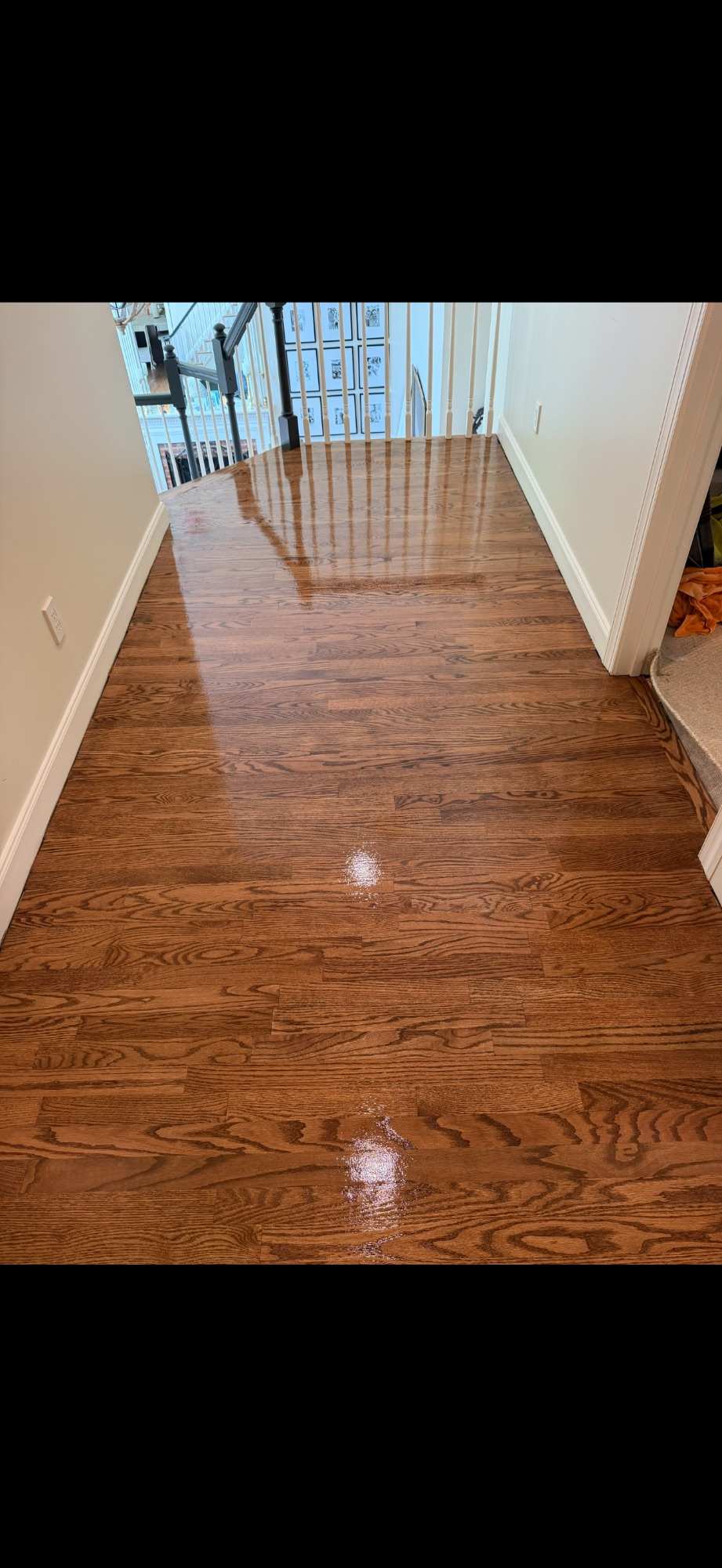
People usually ask us to settle the hardwood-versus-vinyl argument. The honest answer is that most homes we work on in Charlotte, Waxhaw, and Fort Mill end up with both — because the two materials are good at genuinely different things, and the right choice changes from room to room.
Real hardwood's advantage is that it's real, and that it renews. It brings warmth and resale value that no photographic layer reproduces perfectly, and when it gets worn or dated you sand it back and start over. That renewability is the whole argument: a hardwood floor installed today can plausibly still be in service in fifty years, having been refinished three or four times along the way. Vinyl, when it wears out, gets replaced.
Hardwood's weakness is water and humidity. Wood moves — it absorbs moisture and expands, gives it up and contracts. In a controlled interior that movement is manageable. In a bathroom, a laundry room, or a basement that occasionally takes on water, it's a real risk of cupping and buckling. That's the line where we usually steer people to vinyl.
Luxury vinyl plank has improved enormously, and the current generation of it is not the sheet vinyl people remember. A quality LVP is fully waterproof, has a wear layer that shrugs off dog claws and dropped pans, and carries a textured surface registered to the printed grain so it reads as convincing wood underfoot as well as by eye. For kitchens, bathrooms, laundry rooms, basements, and rental properties, it's often simply the better material — not the compromise.
The thing that actually determines whether a vinyl floor looks good is not the plank. It's the subfloor. Vinyl is thin and flexible, so it telegraphs everything underneath it — every hump, dip, and seam. A cheap install skips the leveling and you see it within a year as shiny spots over the high points and flex over the low ones. When we quote vinyl, subfloor patching and leveling is part of the job, because it's what separates a floor that still looks right in five years from one that doesn't.
On mixing the two: the mistake is trying to match them exactly. A vinyl plank that's almost-but-not-quite your hardwood color reads as an error. Either pick a vinyl that genuinely matches the species and stain closely enough to be seamless, or choose something deliberately different and break the two at a doorway with a clean transition strip. Deliberate contrast looks intentional; a near-miss never does.
Wondering what makes sense for your layout? Call (973) 960-5635 and we'll walk the house with you and give you a free written estimate.